
A 100 µm liquid wear layer for digitally printed SPC.
LWL is a liquid wear layer applied over the printed design to protect it: a photo-crosslinkable formulation developed for this application, in place of the traditional wear layer. No backcoating needed.
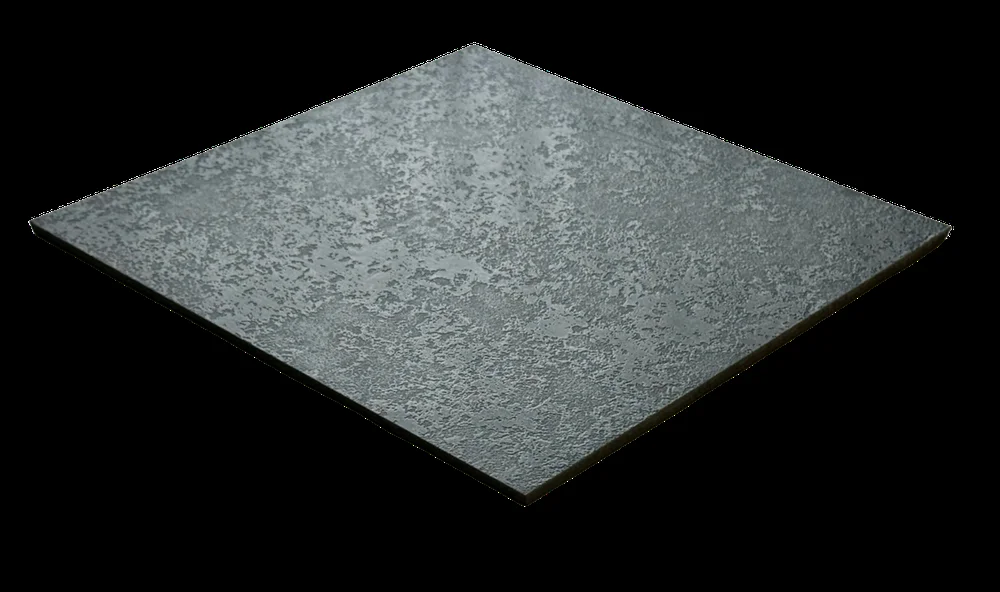
Properties of the Liquid Wear Layer
Formulated for SPC and rigid-core flooring: a digitally texturable, optically clear, photo-crosslinkable wear layer, applied as a liquid directly over the print.
Reduced curling
Minimal curling, unlike UV coatings.
Class 34 at 100 µm
One fifth of the thickness of the best PVC wear layer tested. EN 16511 use class based on wear resistance only (ISO 24338, method A); the full use class requires all tests in Table 2.
Clear on dark prints
No milky appearance. The printed design reads through the wear layer as intended.
Very low odor, label-free
Very low odor in application and in the finished surface. No hazardous transport labeling required.
Low yellowing after curing
The layer cures with minimal yellowing, so the colours of the print beneath it stay true.
One layer less
About 130 g/m² of liquid, applied over the print, replace the PVC wear layer.
Three layers instead of four
LWL replaces the wear layer and the UV top coat, directly over the printed design. No decorative film.
Traditional SPC
SPC with LWL
Class 34 with one fifth of the thickness of the best PVC
Thickness of the protective layer and EN 16511 use class for wear. Green: digitally decorated SPC protected with LWL. Dark grey: best commercial SPC tested. Light grey: other commercial SPC.
EN 16511 use class based on wear resistance only (ISO 24338, method A); for PVC wear layers the standard sets higher cycle thresholds. The full use class requires all tests in Table 2.
Sample by sample
Digitally decorated SPC protected with LWL against the commercial SPC products we tested.
| Sample | Layer µm | Wear class* | Deep scratch N | Micro-scratch A | Micro-scratch class* |
|---|---|---|---|---|---|
| Digital SPC + LWL | 100 | 34 | 32 / 31 | A1 (−8%) | 34 |
| Commercial SPC A | 500 | 32 | 22 / 20 | A3 (32%) | 23 |
| Commercial SPC B | 300 | 23 | 9 / 9 | A5 (−73%) | NC |
| Commercial SPC C | 300 | 31 | 17 / 16 | A2 (−16%) | 34 |
| Commercial SPC D | 200 | 22 | 8 / 6 | – | – |
| Commercial SPC D | 300 | 31 | 8 / 6 | – | – |
| Commercial SPC D | 500 | 31 | 8 / 6 | – | – |
| Commercial SPC E | 550 | 31 | – / 18 | A2 (22%) | 34 |
* EN 16511 use class per single test: wear ISO 24338 method A; micro-scratch EN 16094 method A with gloss change at 60°. The full use class requires all tests in Table 2. Deep scratch: EN 438-2, maximum load in N, parallel / perpendicular. Micro-scratch A: measured change in brackets. NC = not classifiable. – not measured.
Chemical resistance · EN 438-2
| Sample | Toothpaste | Lemon juice | NaCl 30% | Coffee | Black tea | Milk | Red wine | Ammonia 10% | Bleach |
|---|---|---|---|---|---|---|---|---|---|
| Digital SPC + LWL | 5 | 5 | 5 | 5 | 5 | 5 | 5 | 5 | 5 |
| Commercial SPC A | 5 | 5 | 5 | 4 | 5 | 5 | 5 | 5 | 5 |
| Commercial SPC B | – | – | 5 | 3 | – | – | – | 5 | – |
EN 438-2 grades: 5 no visible change · 4 slight change · 3 moderate change · – not tested. ZEEtree laboratory data; commercial samples anonymised.
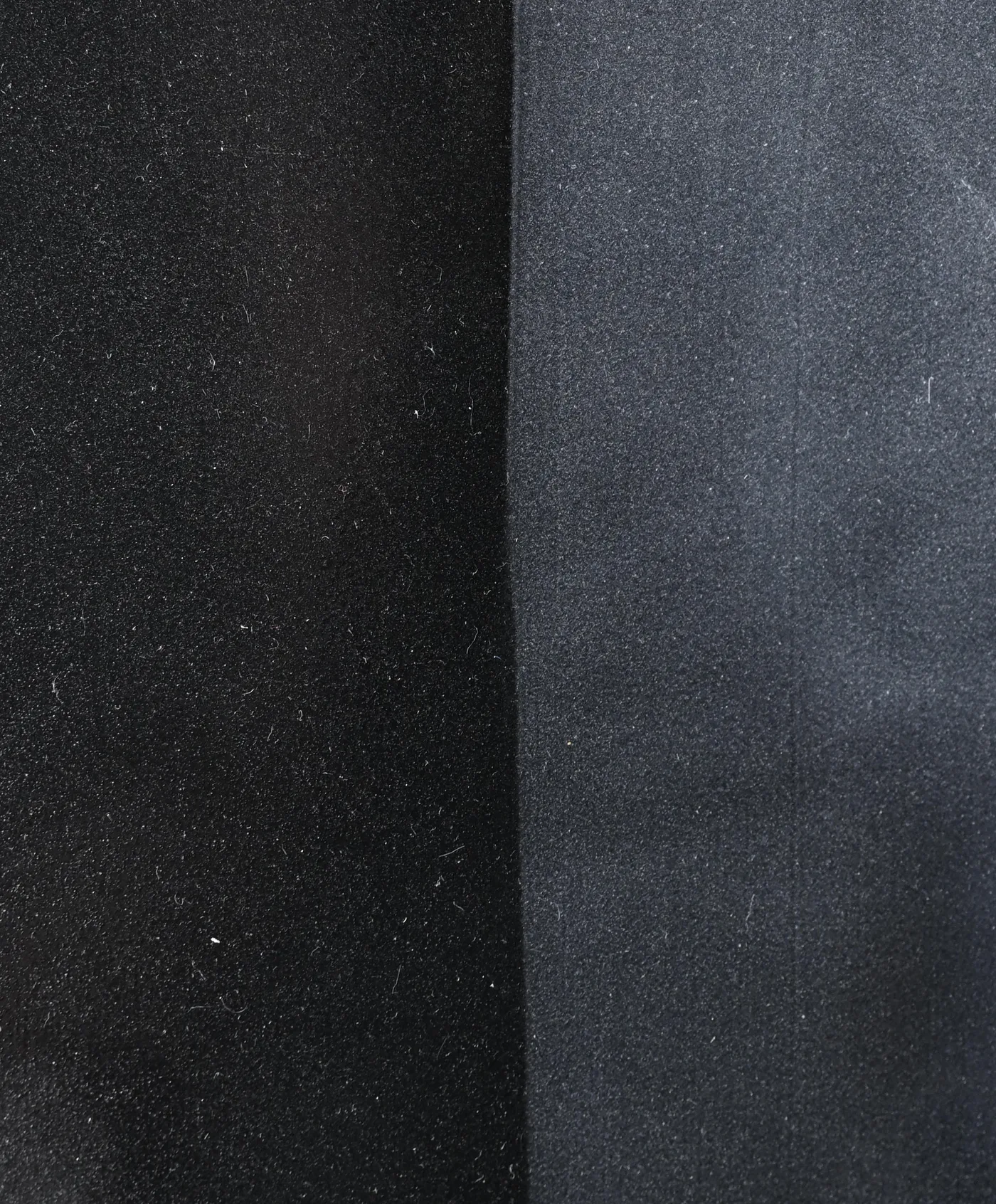 Liquid Wear LayerStandard UV coating
Move over the image to look closer.
Clarity on a black print
Same black ground, two coatings. On the left, Liquid Wear Layer: the black stays black. On the right, a standard antiabrasive UV coating: light scatters in the layer and greys everything underneath.
Texture in register: SCI and CIT
Two proprietary processes texture the Liquid Wear Layer in register with the printed decor, for wood and stone surfaces. Matt and gloss finishes, down to supermatt below 3 GU.
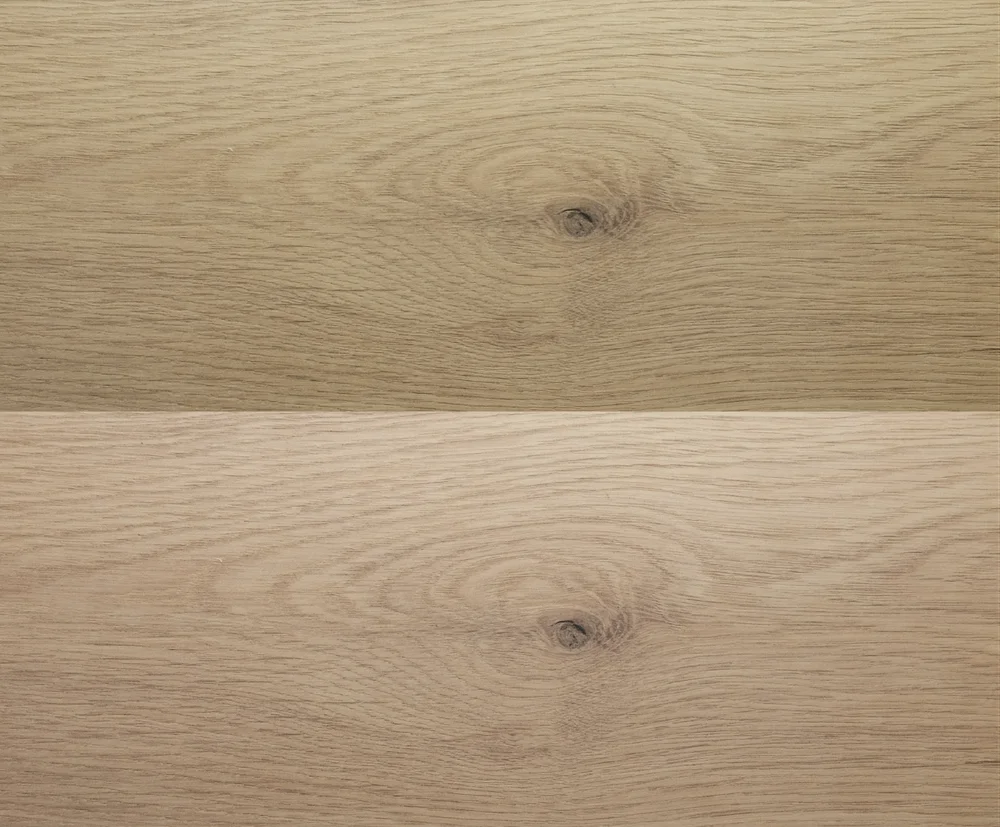
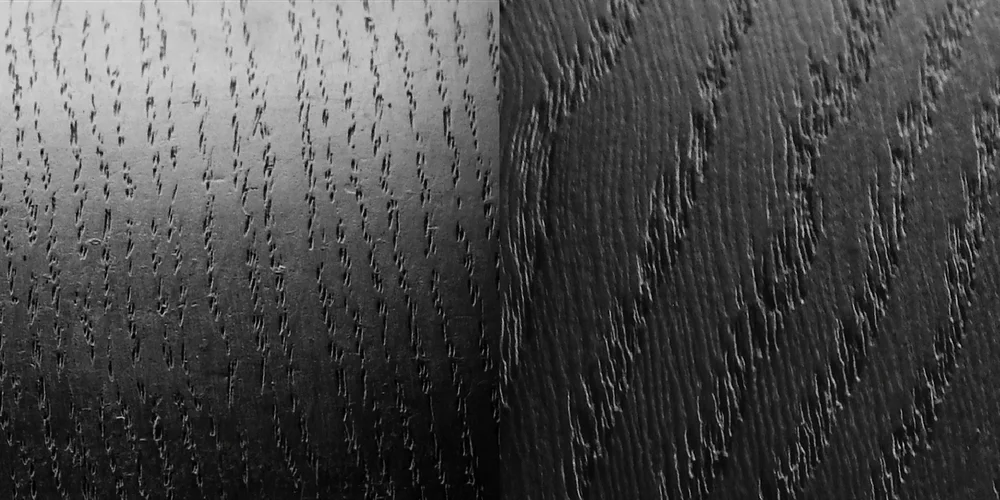 Brushed natural woodSCI
SCI — Selective Curing Inhibition
Patented in 2018 (IT 102018000008133, US 12,083,735 B2). We were the first to use brushing to create sharp three-dimensionality in register with the printed design.
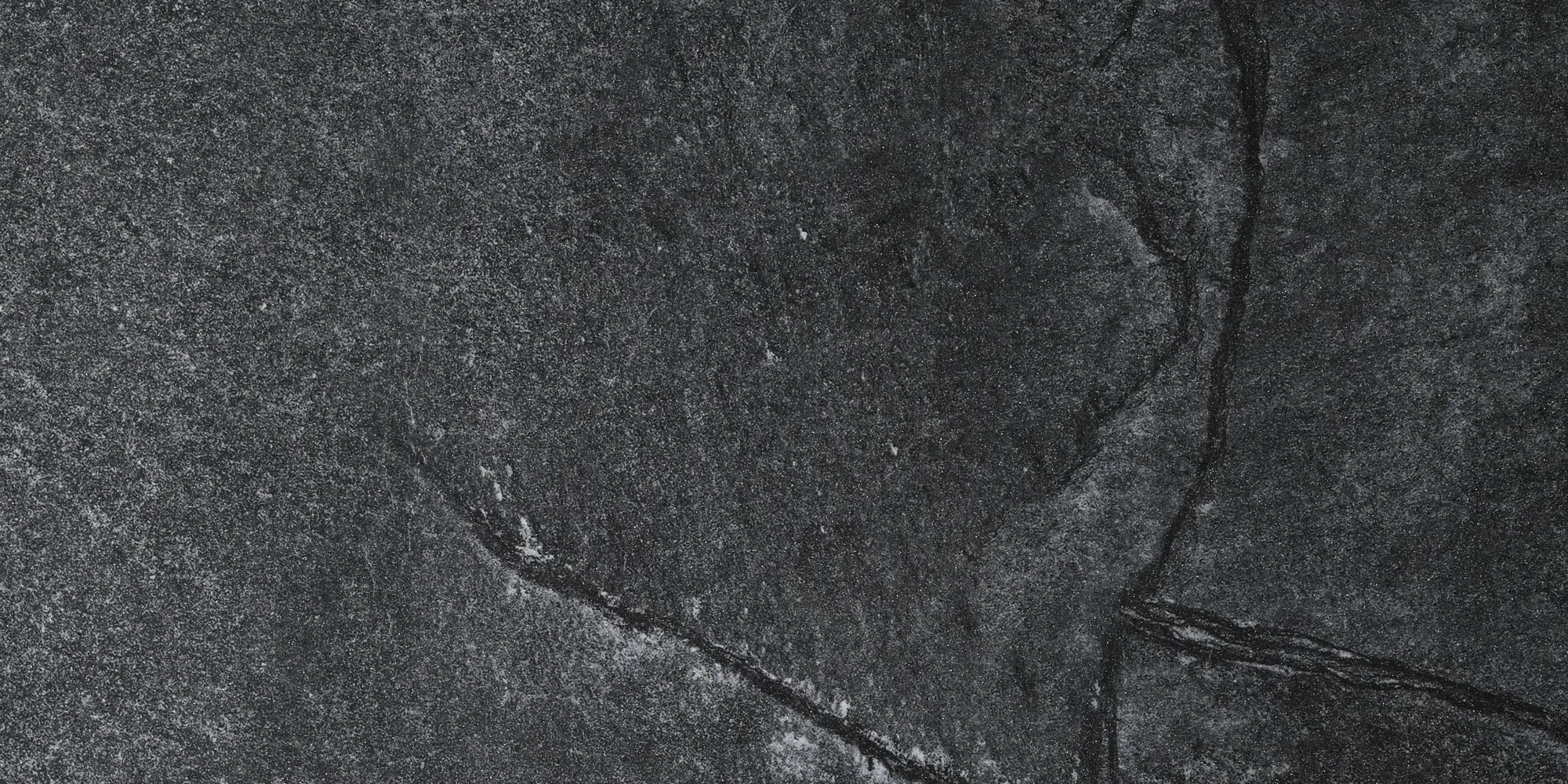
CIT — Contact Imprint Texturing
Our most recent development. In addition to design registration, CIT produces surfaces with differentiated gloss and depth control.
UV-LED inks for single-pass printing of flooring decors
Our inkjet inks are designed for single-pass printing of flooring decors. The gamut is ideal for reproducing natural materials such as wood, stone and cement.
- Use of red instead of magenta reduces metamerism
- Light red and light black allow smooth colour transitions and uniform backgrounds
- Very low odor
- Label-free: no hazardous transport labeling required
ZEEtree and ZEEfarm
ZEEtree, founded in 2018, formulates the chemistry. ZEEfarm, founded in 2025, designs and builds the machines around it, side by side under the same roof in San Vito al Tagliamento.
See the system at zeefarm.com →Moving your SPC production to digital decoration?
LWL, UV-LED inks and texture in register: talk to us.